Curious About Botanical Dyeing? Start Here.

I spent a long time being curious about botanical dyeing but afraid to start—the whole process of tannins & mordants, WOF & vats seemed overwhelming. Like a cat, curiosity got the best of me & I’m SO glad it did. There’s nothing quite like the feeling of pulling something out of a botanical dye vat, the magic of collaborating with plants to create colour. The whole process has been so therapeutic for me, a practice in slowing down, connecting with nature & letting go of control. It’s the perfect way to fix stained garments or make a garment that’s special and unique, just for you.
The way I dye is Flopsy, very intuitive & playful. I’m lucky that I don’t have to worry about consistently recreating the same colours. I like to throw things in vats & see what happens. Usually, it’s beautiful. Sometimes I don’t love what comes out, so I try something else.
I’ve found that botanical dyeing is like baking. There are steps that you need to follow for it to work, but once you know the basics, you can get creative.
I shared last week that I don’t really have any formal training in dyeing (I do, however, hold a pastry chef diploma, hahaha). I’ve woven together my knowledge from free resources, books, & Google searches, plus an online workshop. I’ve learned the most from being in the dye studio & playing around, as well as conversations with friends who also love dyeing.
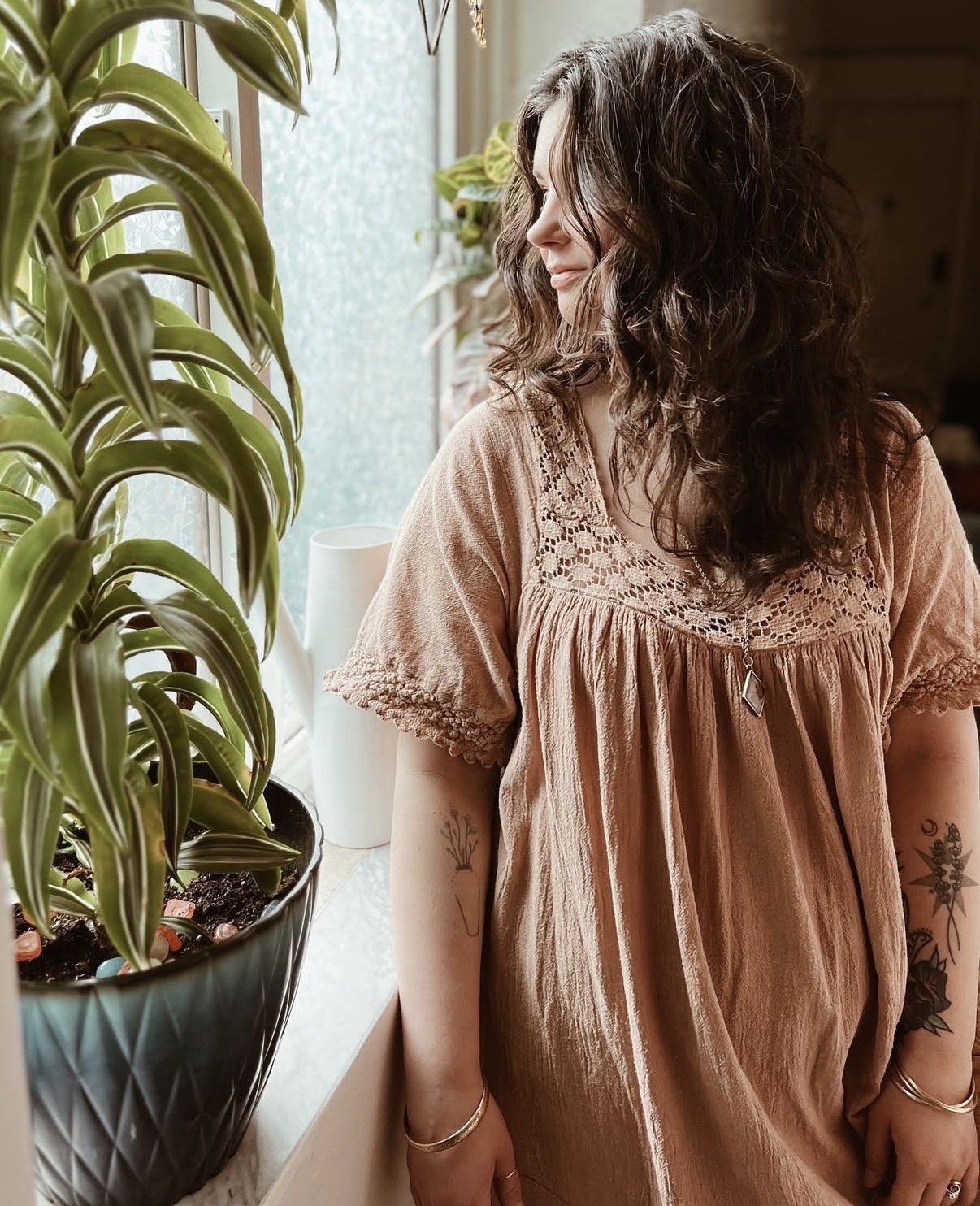
This dress is one of the first pieces I dyed—it’s also what I was wearing when I found out I was pregnant. Isn’t it wild the way clothing carries memories?
There were three key resources I used when I started out & still often turn to:
The essential steps of the dye process found in the free resources at Mawia (this is also where I get all of my supplies).
Bundle dyeing from an online Cara Maria Piazza workshop. It’s no longer available, but her other ones look interesting.
I love Rebecca Desnos’ blog & guides (I use a different mordant process, but the rest is so helpful).
A few things I discovered on my own:
I don’t need fancy dyes (although they are fun to play with). For the last three years, all my dyes were things I found around me. Onion skins, avocado pits & peels, pomegranate rinds from my kitchen. Tansy, goldenrod & yarrow all over the city. Flowers from my garden (marigolds, chamomile, roses, sweet williams, hollyhocks, peonies & rosemary are my faves).
When I was deadheading my garden & something stained my fingers &/or had a strong smell, I threw it in a bundle dye to see what would happen. Usually, something magic—I found some of my favourite dyes this way.
Accept the imperfections & impermanence. These pieces will fade & change over time.
If you don’t like something, change it. Once something has been through the tannin/mordant process, you can always over-dye it.
You will make mistakes, but it’s only a mistake if you don’t learn from it. Stay curious, ask questions, try again. It’s all part of the process.
You can recharge exhaust vats with other dye ingredients. This reduces water & dye material consumption while creating unique colours.
I’m still learning as I go. I’m hoping to take a few more online courses this spring to learn painting & different resist techniques, & I just bought a batch of dyes from Maiwa to play with. Part of what I’m stoked to do with this space this year is create a virtual dye journal & share what I’m discovering. The next few weeks are devoted to dyeing a new collection for my Market Collective; I hope you’ll follow along!